
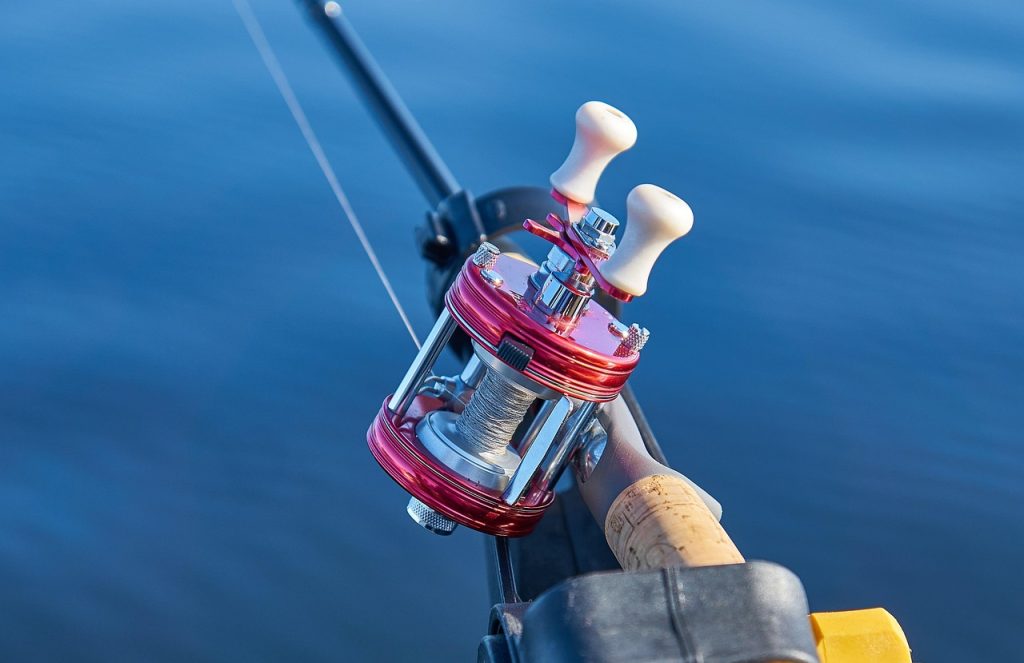
Bait casting Systems
Bait casting reels are ideal for targeting bass, pike, and other species where precision and power are needed most.
As shown in the photo, the line is wound on an open reel. When the crank is turned, the reel rotates and the fishing line winds onto the reel. The line passes through a guide which moves back and forth when the crank is turned, automatically winding the line evenly on the reel.
When casting, the angler controls the rate at which the line is pulled off the reel by applying thumb pressure. This gives the angler more control over the trajectory of the bait-hook-sinker, improving the precision with which the cast is placed.
The learning curve is steeper than with other systems, as improper thumb control can result in backlashes or “bird’s nests” in the line, making a big snarl on the reel. However, experienced anglers appreciate the superior casting control and cranking power that bait casting equipment provides. Learning to use a bait casting reel is no doubt worth the trouble for many anglers.
Divertissement
When I was a child, many, many long moons ago, bait casting rods and reels were the best equipment available (not counting fly fishing equipment, which was dismissed out of hand as beyond the reach of mere mortals). I recall my father taking myself and a friend fishing. I know he spent at least as much time untangling backlashes as he did with his line in the water. May God rest his soul.
Spinning Systems
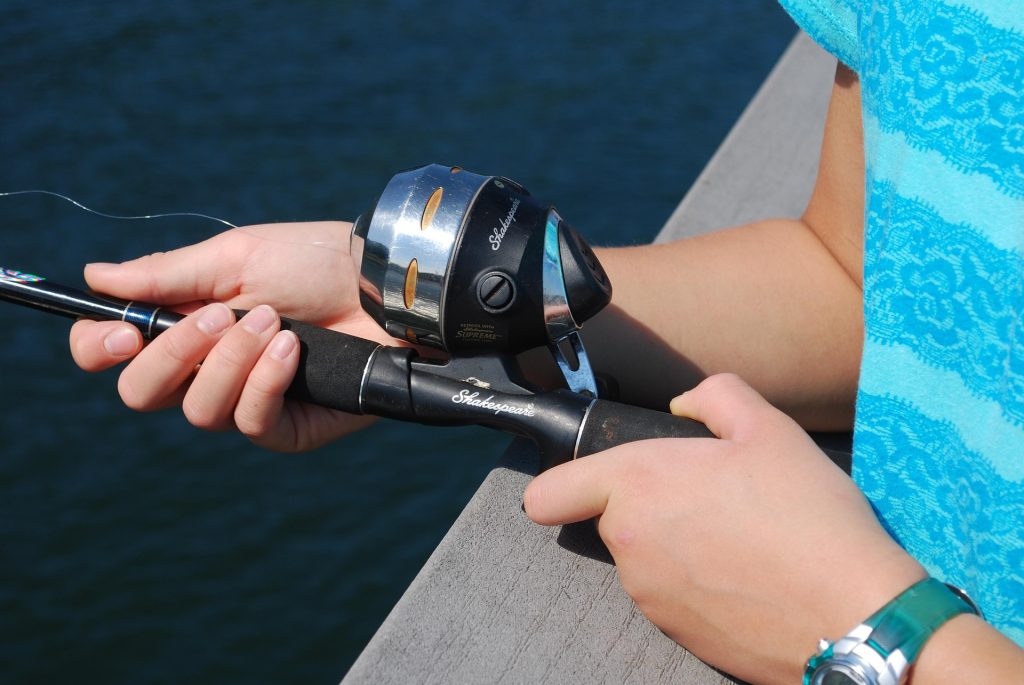
The spinning rod and reel combo is the most versatile and beginner-friendly option available. The reel hangs beneath the rod, and line peels off a fixed spool during the cast, virtually eliminating tangles. Spinning gear handles a wide range of lure weights and excels with lighter presentations that bait casters struggle to cast effectively.
This system works beautifully for everything from panfish to medium-sized game fish. Spinning reels cast lighter lures farther and with less effort than bait casters, making them perfect for finesse techniques and smaller baits. The intuitive casting motion and forgiving nature make spinning combos the go-to choice for beginners and a valuable tool for experienced anglers.
Fly Fishing Systems
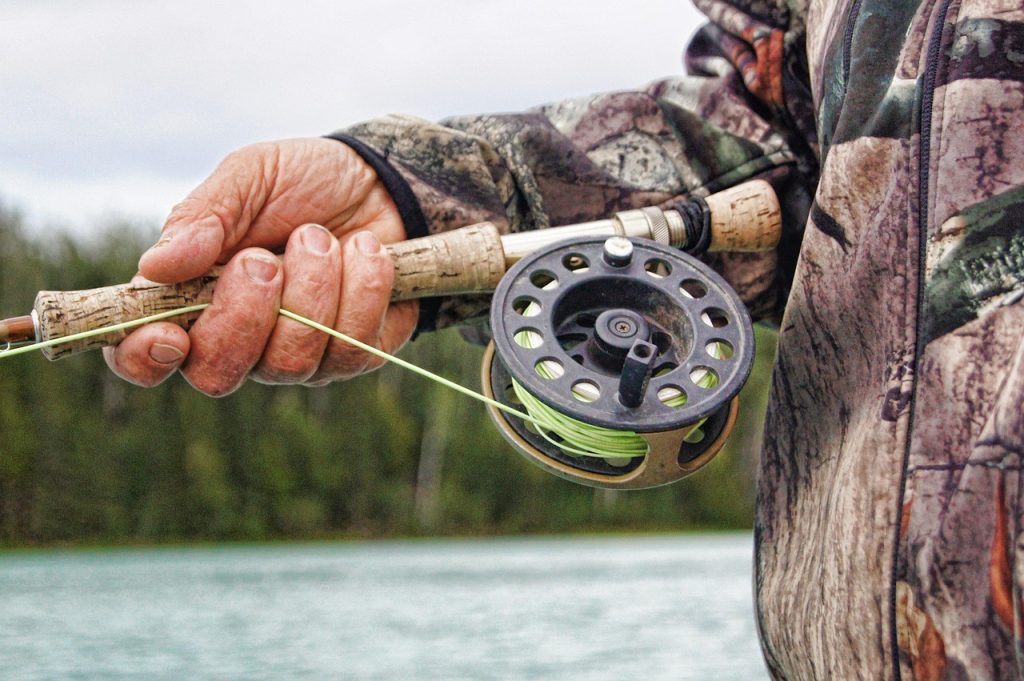
A fly rod and reel combo operates on an entirely different principle. Instead of the lure’s weight carrying the line, the weighted fly line itself carries nearly weightless artificial flies to the target. The reel serves primarily as line storage, while the rod’s flexible action loads and unloads energy during the distinctive back-and-forth casting motion.
Fly fishing is its own world, and targets species ranging from trout in mountain streams to tarpon in tropical flats. The technique emphasizes delicate presentations and imitating natural insects or small fish. In some instances the art and science of tying flies becomes almost equal to the art and science of using them to catch fish.
Many lakes and streams are completely unsuitable for fly fishing, which requires clear cool water.
All that can usefully be said in this limited format has been said, except to encourage the reader to investigate further, and find out more about fly fishing habitats near you. Good luck!
The Importance of Matched Components
Line test weight—the breaking strength of fishing line—drives many critical decisions in rod and reel selection. All three type of reel have a “drag” setting. When a fish is “on the line” it will swim in erratic ways in an attempt to dislodge the hook from its mouth. If the pull on the line exceeds the line test weight, the line will break. To protect the line, the reel has a “drag” setting. If the drag is set below the line test weight, the reel will allow line to be paid out when the pull on the line reaches the drag setting. With the drag so set, the force on the line will always be less than the line test weight.
Rod characteristics also correlate directly with line weight. Heavier line requires stiffer, more powerful rods to cast effectively and handle the increased strain. Lighter line pairs with more flexible rods that protect fragile monofilament from breaking during a fish’s sudden surge. The rod’s guides, length, and action all complement the intended line weight range.
This interrelationship explains why purchasing a combination instead of buying rod, reel, and line separately makes tremendous sense. Manufacturers design combos with components specifically matched to work together. The reel’s drag system complements the rod’s power, the line capacity suits the intended species, and everything operates within the same weight class. This coordination eliminates guesswork and ensures balanced performance from your first cast.
Whether you choose bait casting for power and precision, spinning for versatility and ease, or fly fishing for the ultimate in presentation finesse, a properly matched combo provides everything you need to succeed on the water. Understanding these fundamental differences helps you select equipment suited to your target species and fishing style.