Angling and Fishing

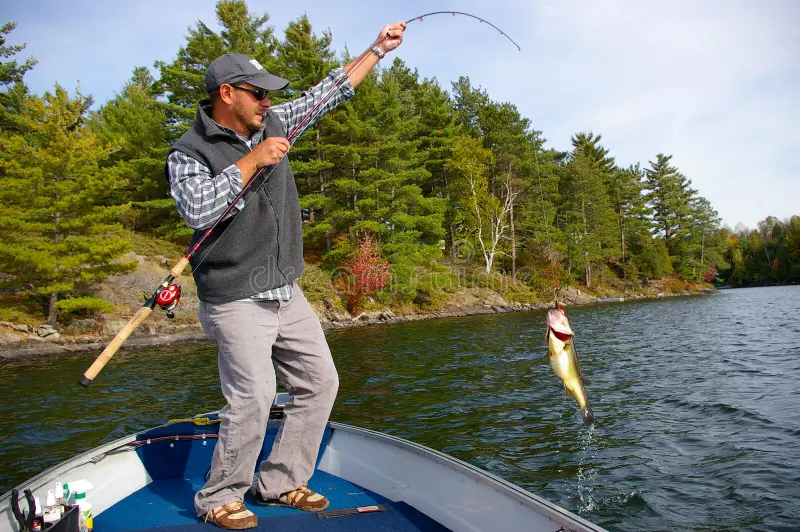
man catches Fish
…I got one! Now I just need to bring him in.

Welcome to our collection of posts on an introduction to angling!

This collection discusses the meaning of the word “angling,” describes a very basic fishing tackle setup, which can be used with live bait or artificial lures, and describes some special types of angling, such as fishing from a boat and ice fishing. It also introduces general fish behavior and explores the habits of some of the most popular species favored by anglers.

Though these posts are very basic, a quick perusal may yield some new and interesting bits of information, even for experienced anglers.

Fishing is one of humanity’s oldest food-gathering practices. At its broadest, fishing refers to any method of catching fish or other aquatic animals. This can include netting, trapping, spearing, hand gathering, and even modern industrial techniques using massive vessels and sophisticated electronics. Within this broad category lies a more specific and culturally rich practice known as angling. While the two terms are often used interchangeably in casual conversation, they describe activities that differ in purpose, technique, and complexity.

Angling is a particular form of fishing that relies on a hook attached to a line, which is manipulated by the angler to entice a fish to bite. The word “angling” itself comes from the Latin angulus, meaning “hook,” and that focus on the hook is central. Unlike net fishing or trapping, angling typically targets individual fish rather than large numbers at once. It emphasizes skill, patience, and an understanding of fish behavior, water conditions, and equipment. For many practitioners, angling is not merely a way to obtain food but a recreational, sporting, or even contemplative pursuit.

This distinction highlights one of the key differences between fishing and angling: intent and engagement. Fishing, in the general sense, can be purely utilitarian. Its goal may be efficiency and yield, with minimal concern for the experience of the fisher beyond success. Angling, by contrast, usually involves a direct, active relationship between the angler and the fish. The angler chooses specific tackle, presents bait or lures in deliberate ways, and responds to subtle signals transmitted through the line. Catching a fish is often only part of the reward; the process itself is central to the practice.

Angling is also notably complex. Beneath its seemingly simple image—a person holding a rod beside a body of water—lies a vast body of knowledge. Anglers consider factors such as water temperature, depth, clarity, current, weather, seasonal fish movements, and feeding habits. There are countless specialized techniques: fly fishing, spin fishing, bait fishing, float fishing, bottom fishing, and more. Each has its own equipment, terminology, and traditions. Even the choice of hook size or line thickness can make the difference between success and failure.

Because of this complexity, the term angling covers an enormous range of topics. It can encompass biology, hydrology, meteorology, craftsmanship, ethics, and environmental conservation. Discussions might range from knot-tying and rod action to fish physiology and habitat preservation. As a result, any serious attempt to explain angling must narrow its focus drastically. Without such narrowing, the subject becomes unmanageable. Introductory treatments often concentrate on the most basic equipment and techniques, providing a foundation upon which more specialized knowledge can later be built.

Here, we will limit our discussion to freshwater angling, recognizing that we are excluding a vast world of saltwater angling worthy of its own collection of posts.

At its most fundamental level, angling can be practiced with a very simple tackle setup. The core components are a fishing line, a hook, a weight, a float, and a rod or pole. Despite their simplicity, each part has a specific role.

At the lower end of the line is a lead weight known as a sinker. The sinker helps the line sink into the water and stabilizes the bait against currents or wind. Some distance above the sinker, a loop is tied in the line. This loop allows a fishhook to be easily attached and removed. The hook is attached by folding a section of the loop and threading the resulting loop through the eye of the hook. This forms a new loop, and passing the hook back through this new loop attaches the hook to the line. The hook can be easily removed by reversing these steps.

The hook is the critical element of angling, as it holds the bait and, when a fish bites, allows the angler to secure the catch.

Above the hook, attached to the line, is a fishing float, commonly called a bobber. The bobber is easily movable along the line, allowing the angler to adjust the depth at which the bait is presented. Floating on the water’s surface, it serves as a visual indicator: when a fish takes the bait, the bobber may dip, tilt, or disappear beneath the water, signaling a bite.

Finally, the line is attached to a stick or rod known as a fishing pole. This pole allows the angler to cast the line into the water, control its position, and respond when a fish bites. Even in its most basic form, the fishing pole provides leverage and sensitivity, and translates movements beneath the water into tactile and visual feedback for the angler.

Together, these simple components form the foundation of angling. From this humble setup grows a remarkably deep and varied practice—one that illustrates how angling, while a subset of fishing, stands apart as a skillful, nuanced, and richly layered human activity.
Fish Hooks

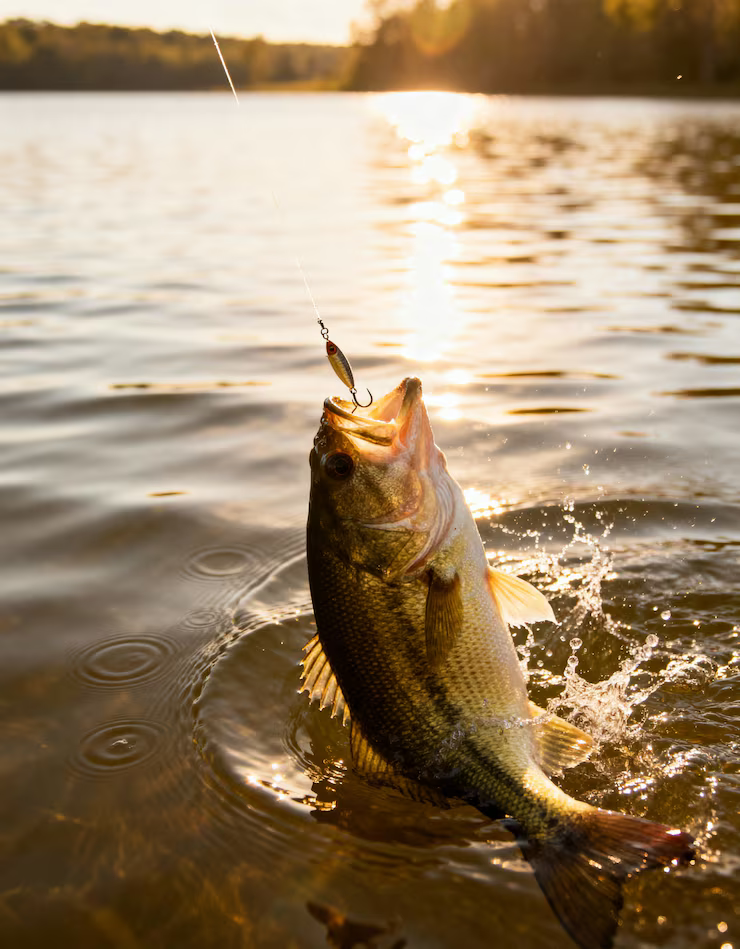
A Fishhook does its job.

Fishhooks are among the oldest and most essential tools in angling, the practice of catching fish with a hook and line. The word angling itself comes from the Latin angulus, meaning hook, underscoring how central the fishhook is to this method of fishing.

In angling, fish are caught when they bite onto a real or artificial bait that has an embedded or attached hook. The hook penetrates the fish’s mouth—usually the lip or jaw—allowing the angler to control and eventually land the fish. Hooks are used with natural baits such as worms, insects, or fish, as well as artificial lures designed to imitate prey.

Fishhooks are sized and specified using a somewhat counterintuitive system. Hook sizes are specified by a system in which larger size numbers are associated with smaller hooks. For example, a size 32 hook is much smaller than a size 1 hook. For sizes larger than “1,” the sizing switches to “aught” measurements (written as 1/0, 2/0, up to 20/0 or larger) where size “2/0” is greater than size “1/0,” and so forth.

Fortunately, this last paragraph is for information only. Very few people will go into a store and ask for a size 11 hook. What is actually done is to go to a sporting goods store, look over the available hooks and try to choose one which will “fit” the fish we intend to catch. Usually we will want the hook to be about the same size as the mouth of the fish we are trying to catch.

One of the most common distinctions among fishhooks is between single and treble hooks. A single hook has one point and one shank, making it versatile and widely used for bait fishing, fly fishing, and many artificial lures. Single hooks are easier to remove from a fish’s mouth and are often preferred for catch-and-release fishing. Treble hooks consist of three single hooks joined at a central shank, forming three points. They are commonly used on hard-bodied lures such as crankbaits and spoons, where multiple points increase the chance of hooking a striking fish. However, treble hooks can cause more injury to fish and are more prone to snagging vegetation or debris.

Another important distinction is between barbed and barbless hooks. Most hooks are barbed. These feature a small backward-facing projection near the point, designed to prevent the hook from slipping out once it has penetrated. These hooks increase landing success but can make hook removal more difficult and potentially more harmful to fish. Barbless hooks, by contrast, lack this projection. They are easier to remove, reduce handling time, and are often required by fishing regulations in catch-and-release waters. Many anglers also crimp the barbs on standard hooks to achieve similar benefits.

Weedless hooks are designed to minimize snagging on aquatic plants, rocks, or submerged wood. They typically incorporate a wire guard or a hook orientation that shields the point until a fish bites down. Weedless designs are especially useful in heavy cover, such as lily pads or grassy shallows, where conventional hooks would frequently snag.

In sum, the different types of modern fishhooks, though simple, have been shaped by centuries of refinement. These variations and specialized designs are made to fit diverse conditions and goals of angling.

Fortunately, a deep knowledge of fishhook design and application are not required to choose a hook and begin fishing. It is possible to get started just by using common sense, and by knowing the common types of hooks available. Don’t obsess. You can’t go far wrong. Just go ahead and have fun!

Bait, Spinning Reel, and Fly Combos

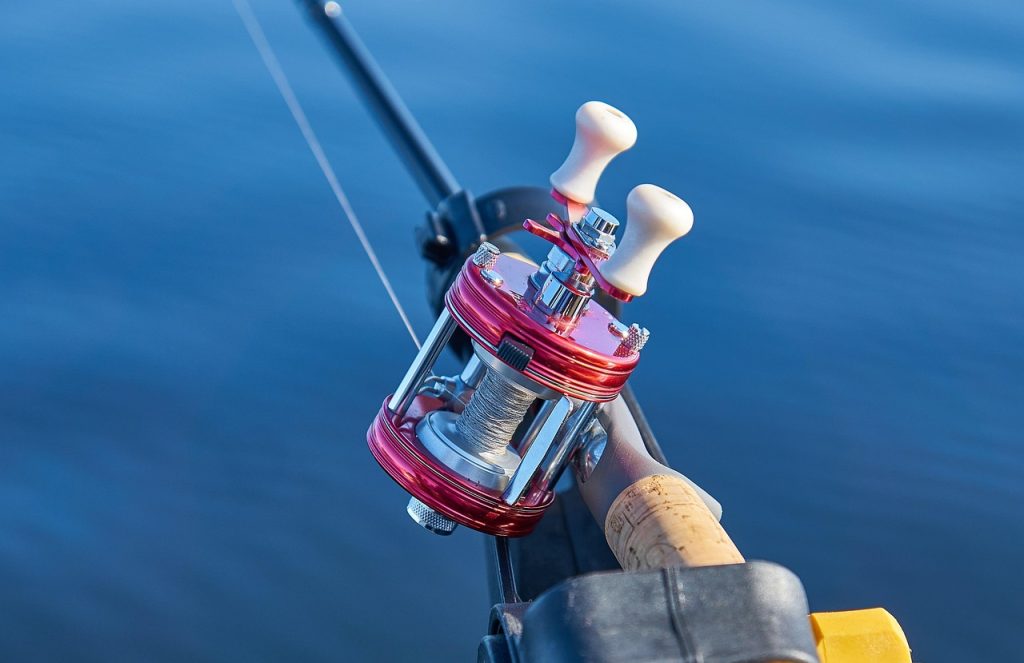
A Bait Casting Reel

Bait casting Systems

Bait casting reels are ideal for targeting bass, pike, and other species where precision and power are needed most.

As shown in the photo, the line is wound on an open reel. When the crank is turned, the reel rotates and the fishing line winds onto the reel. The line passes through a guide which moves back and forth when the crank is turned, automatically winding the line evenly on the reel.

When casting, the angler controls the rate at which the line is pulled off the reel by applying thumb pressure. This gives the angler more control over the trajectory of the bait-hook-sinker, improving the precision with which the cast is placed.

The learning curve is steeper than with other systems, as improper thumb control can result in backlashes or “bird’s nests” in the line, making a big snarl on the reel. However, experienced anglers appreciate the superior casting control and cranking power that bait casting equipment provides. Learning to use a bait casting reel is no doubt worth the trouble for many anglers.

Divertissement

When I was a child, many, many long moons ago, bait casting rods and reels were the best equipment available (not counting fly fishing equipment, which was dismissed out of hand as beyond the reach of mere mortals). I recall my father taking  myself and a friend fishing. I know he spent at least as much time untangling backlashes as he did with his line in the water. May God rest his soul.

Spinning Systems

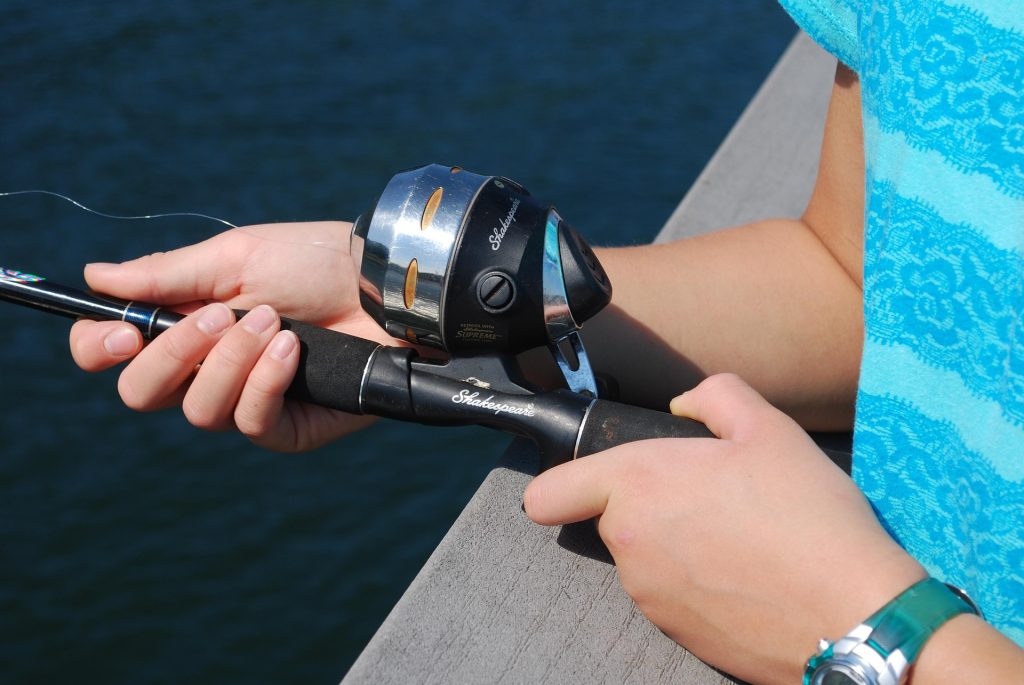
A Spinning Reel on a Rod

The spinning rod and reel combo is the most versatile and beginner-friendly option available. The reel hangs beneath the rod, and line peels off a fixed spool during the cast, virtually eliminating tangles. Spinning gear handles a wide range of lure weights and excels with lighter presentations that bait casters struggle to cast effectively.

This system works beautifully for everything from panfish to medium-sized game fish. Spinning reels cast lighter lures farther and with less effort than bait casters, making them perfect for finesse techniques and smaller baits. The intuitive casting motion and forgiving nature make spinning combos the go-to choice for beginners and a valuable tool for experienced anglers.

Fly Fishing Systems

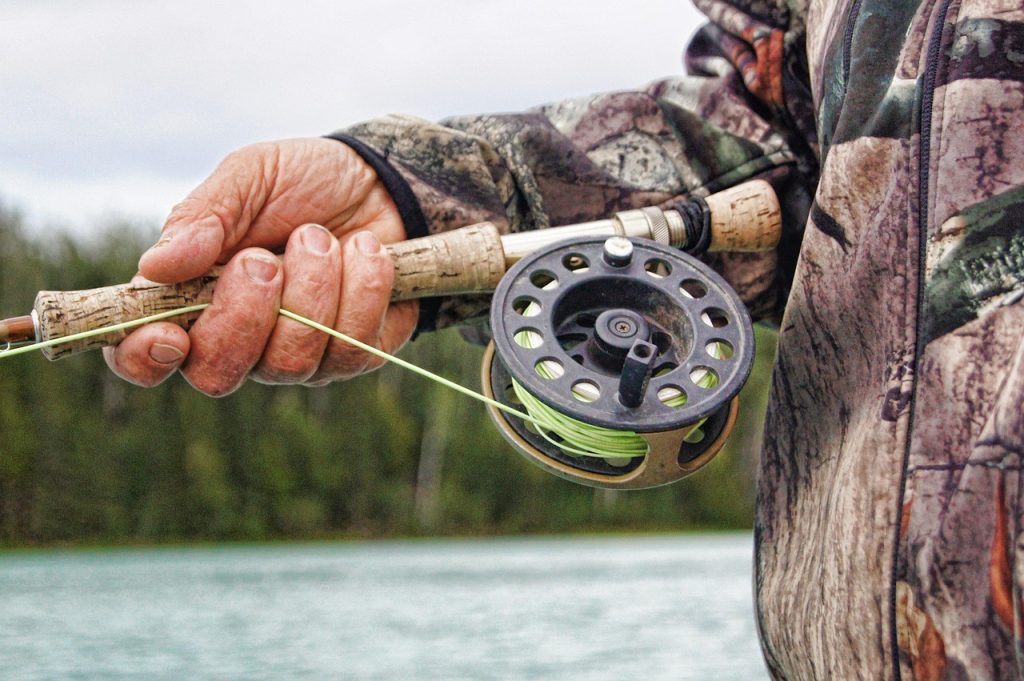
A Fly Fishing Reel on a Rod

A fly rod and reel combo operates on an entirely different principle. Instead of the lure’s weight carrying the line, the weighted fly line itself carries nearly weightless artificial flies to the target. The reel serves primarily as line storage, while the rod’s flexible action loads and unloads energy during the distinctive back-and-forth casting motion.

Fly fishing is its own world, and targets species ranging from trout in mountain streams to tarpon in tropical flats. The technique emphasizes delicate presentations and imitating natural insects or small fish. In some instances the art and science of tying flies becomes almost equal to the art and science of using them to catch fish.

Many lakes and streams are completely unsuitable for fly fishing, which requires clear cool water.

All that can usefully be said in this limited format has been said, except to encourage the reader to investigate further, and find out more about fly fishing habitats near you. Good luck!

The Importance of Matched Components

Line test weight—the breaking strength of fishing line—drives many critical decisions in rod and reel selection. All three type of reel have a “drag” setting. When a fish is “on the line” it will swim in erratic ways in an attempt to dislodge the hook from its mouth. If the pull on the line exceeds the line test weight, the line will break. To protect the line, the reel has a “drag” setting. If the drag is set below the line test weight, the reel will allow line to be paid out when the pull on the line reaches the drag setting. With the drag so set, the force on the line will always be less than the line test weight.

Rod characteristics also correlate directly with line weight. Heavier line requires stiffer, more powerful rods to cast effectively and handle the increased strain. Lighter line pairs with more flexible rods that protect fragile monofilament from breaking during a fish’s sudden surge. The rod’s guides, length, and action all complement the intended line weight range.

This interrelationship explains why purchasing a combination instead of buying rod, reel, and line separately makes tremendous sense. Manufacturers design combos with components specifically matched to work together. The reel’s drag system complements the rod’s power, the line capacity suits the intended species, and everything operates within the same weight class. This coordination eliminates guesswork and ensures balanced performance from your first cast.

Whether you choose bait casting for power and precision, spinning for versatility and ease, or fly fishing for the ultimate in presentation finesse, a properly matched combo provides everything you need to succeed on the water. Understanding these fundamental differences helps you select equipment suited to your target species and fishing style.